Dear Reader,
Are we being pessimistic? Do we have only one reader? If that’s the case, then we’re glad you are our reader.
We’ve been busy, very busy, with guests for the last week or so. The posts to this blog have been written only in intentions but, sadly, not in the blog. We will try to turn a new leaf.
 |
| Civitella Marittima |
We’ve rented a car, a white Alfa-Romeo Giulietta, and we’ve driven to the Maremma, the area of Tuscany west of Florence that borders on the Tyrrhenian Sea. Pisa is to the north and Rome is to the south and in between is an area of rolling hills and former swamplands. Because the swamps were only drained in the 20th century, development here is new in many ways.
 |
| Morning fog settles into the valley below |
This new development includes the production of really good wines. A little to the north in the Maremma the new Super Tuscans are being produced. These wines have no place in the traditional scheme of Italian wines yet they are prized ... and often very expensive.
 |
| A garden in Civitella Marittima |
We are more interested in some of the less expensive, more traditional red wines of the area. We’re staying in a little town called Civitella Marittima, home to about 500 people. The town in on the edge of the Strada del Vino Montecucco (the Montecucco wine trail.) The view of the town from below is familiar; the hometown of one of us looks very much like Civitella Marittima. Civitella, however, is more prosperous; the town has a bakery, a butcher shop, a coffee bar, a florist, and a Michelin one-star restaurant.
So far we have visited one small winery, Le Calle. They produce a number of wines and we tasted their DOC Rosso, their DOC Montecucco, and their DOC Montecucco Riserva. The second and third wines had spent time in oak and were sophisticated. As we tasted these wines we considered what foods might be paired with each. We purchased a bottle each of the second and third wines.
 |
| Casina di Rosa apartment |
After the tasting we had lunch at one of the two restaurants in Civitella Marittima. It may be a small town but this restaurant, Locanda nel Cassero, has a Michelin star and is listed in the best Italian guide to restaurants in the country. We ordered our lunch and the owner suggested one of the exact same wines that we had just tasted earlier in the day.
To the left is a photo of the apartment we’re staying in. The place is called Casina di Rosa and is kept by a couple; he’s a Canadian from Ottawa who “came 17 years ago and never left” and she’s from the town.
We visited the tourist office in a nearby town and picked up a brochure with some helpful advice regarding food in this area. The entire list is reproduced below. The last two items and interesting and wholly part of the Italian table.
Some rules about the typical cuisine in the Maremma:
- virgin olive oil must be used
- cream is not to be used
- cheeses and cold meats must come from the local territory
- wines must be produced locally
- typical Tuscan bread must be used (Note: Tuscan bread has been unsalted since the time of Dante.)
- fish must always be kept fresh
- dishes must not be cooked beforehand
- wild-grown vegetables should be used, if possible
- pasta should be cooked according to suggested cooking time
- all cold meats should be well-matured
- conversation is recommended while eating
- a new guest is always welcome
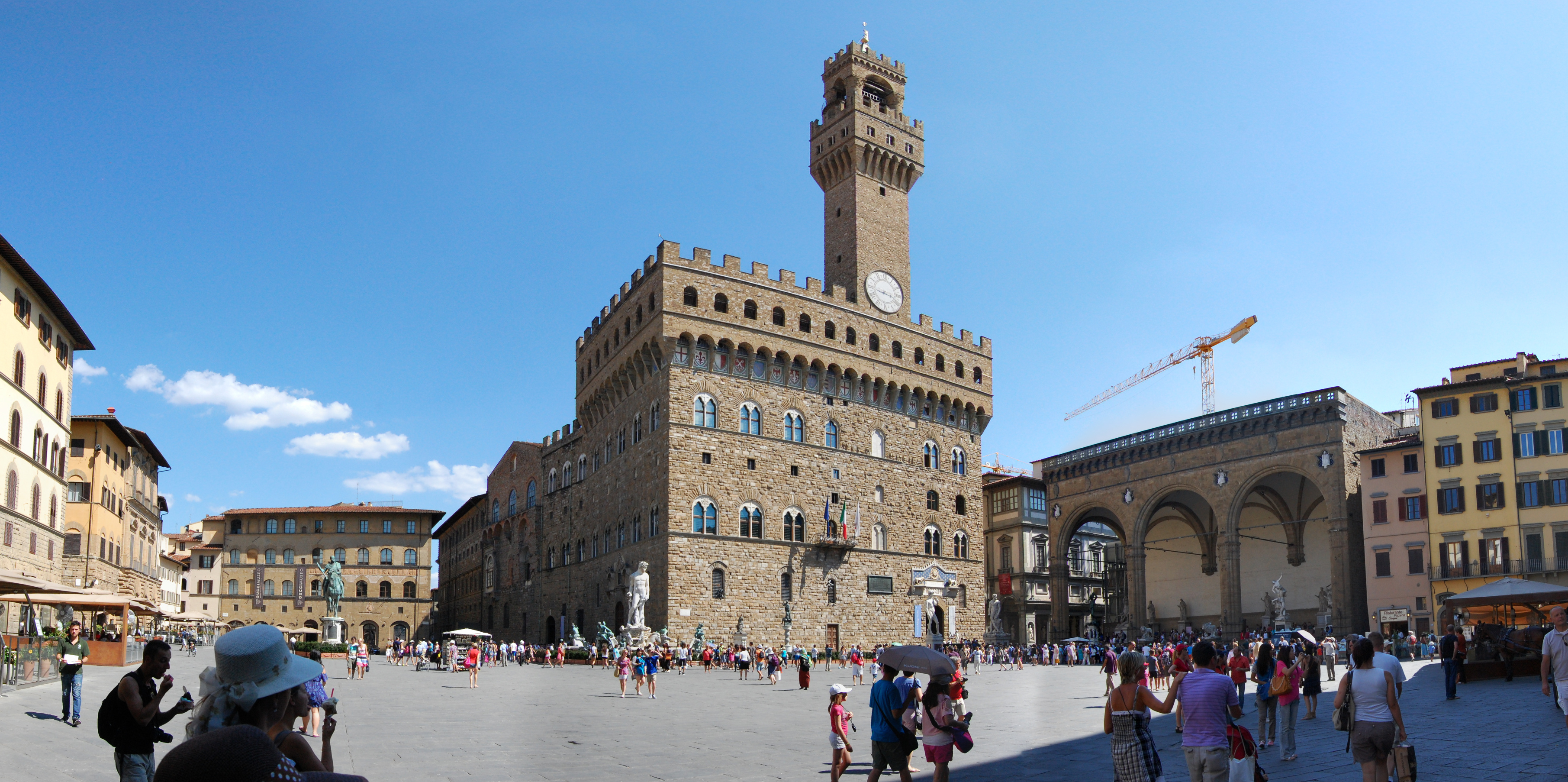
Just before we left Florence we spend part of a morning admiring Michelangelo’s David which stands in a museum that was built the famous, 17-foot high statue. A natural light shines down from above and the statue gleams as David faces his soon-to-be-defeated adversary.
While we were in the museum a person almost as tall as David himself visited. Kareem Abdul-Jabbar walked through the gallery. He is trim and tall, of course, at that time he was the only person in the museum whose stature compared to the David. He stayed briefly and moved on.
It must be difficult to be so instantly recognizable.